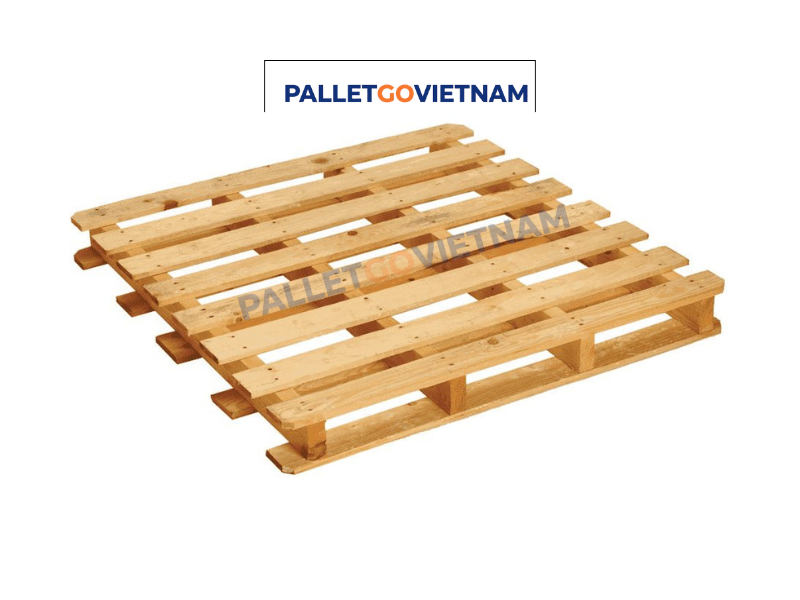
Vietnam exports over USD 50 billion of agricultural and seafood products each year, and a wooden pallet is mandatory packaging on every shipment. The sector is defined by damp cold-storage environments, heavy goods (frozen shrimp and fish at 500-1,500 kg per pallet), and strict phytosanitary controls from the EU, Australia and Japan. ICD Vietnam supplies moisture-resistant acacia and melaleuca wooden pallets, ISPM-15 HT certified, suited to the full cold chain from processing plant to export port.
Agricultural and seafood goods differ from other sectors in key ways: pallets frequently contact standing water in cold storage, goods are heavy (frozen fish boxes at 20-25 kg x 50-60 boxes = 1,000-1,500 kg per pallet), and the journey is long with multiple transshipments. Choosing the right wood species and controlling moisture decide pallet lifespan in these conditions.
Agriculture-grade wooden pallet specifications
| Specification | 1200x1000 mm | 1100x1100 mm |
|---|---|---|
| Dimensions | 1200x1000x120 or 144 mm | 1100x1100x120 or 144 mm |
| Dynamic load | 1,000-2,000 kg | 1,000-2,000 kg |
| Static load | 3,000-5,000 kg | 3,000-5,000 kg |
| Weight | 18-24 kg each | 20-26 kg each |
| Material | Acacia or melaleuca, moisture resistant | |
| Phytosanitary | ISPM-15 HT (heat) - no MB | |
| Operating temperature | -25C to +50C | |
For seafood processors: cold storage and special pallet requirements
For plants processing shrimp, fish and squid for export, wooden pallets in cold storage face the harshest conditions: temperatures cycling from -25C to +10C, air humidity at 85-95% RH, and standing water from defrost and misting systems. Acacia and melaleuca have a denser grain than pine, absorb moisture 30-40% more slowly and warp less under sudden temperature change. Recommendation: choose a 1200x1000 mm acacia pallet, moisture controlled below 18%, with a dynamic load of at least 1,500 kg for heavy frozen loads. See our wooden pallet load capacity guide.
For teams exporting to Australia: the strictest phytosanitary regime in the world
For teams exporting produce to Australia, this is the strictest wood-packaging quarantine regime in the world. The DAWE (Department of Agriculture, Water and the Environment) requires: (1) ISPM-15 pallets with a clear IPPC mark on all 4 sides; (2) an accepted treatment method of HT (56C/30 minutes) - Australia has refused MB since 2020; (3) a wood species not on the import-prohibited list (plantation acacia and melaleuca are both accepted); (4) a customs declaration with the ISPM-15 certificate and the treatment facility registration number in Vietnam. Common error: a faded IPPC mark or missing VN country code - the whole shipment can be held at Sydney or Melbourne port.
Acacia vs melaleuca for agriculture
Both acacia and melaleuca suit the agriculture sector, but key differences affect pallet cost and lifespan.
| Criteria | Acacia | Melaleuca |
|---|---|---|
| Moisture resistance | Good - dense grain, low absorption | Very good - natural oil resists moisture |
| Load | Higher - 1,500-2,000 kg dynamic | Medium - 1,000-1,500 kg dynamic |
| Cold-storage lifespan | 3-5 years with proper care | 2-3 years |
| Cost | 15-20% higher | Lower, budget friendly |
| Best for | Cold storage, heavy goods | Fruit and vegetables, lighter goods |
Applications in agriculture and seafood
- Shrimp and fish export processing plants: cold storage at -25C, ISPM-15 for EU/US/Japan/Australia
- Frozen-fruit processing plants: frozen mango, lychee and longan for the Middle East and Europe
- Agricultural cold-chain logistics: temporary storage awaiting containers, port transshipment
- Bagged rice export: 25-50 kg rice bags on 1100x1100 mm pallets per Philippine and Indonesian import standards
- Fresh produce distribution: supermarkets and wholesale markets - light, easy-to-clean melaleuca pallets
Frequently asked questions
Do wooden pallets get moldy in cold storage?
They can if not properly controlled. Wood above 19% moisture in a cold-storage environment is an ideal condition for mold. The solution: use kiln-dried pallets below 18% moisture, dry them fully before returning them to cold storage after each cleaning, and inspect monthly. Pallets with black or green mold must be removed immediately - never treat with chemicals and reuse for food.
Acacia or pine for seafood export to Japan?
Acacia is more suitable for seafood export to Japan because it resists moisture better, carries higher loads (suited to heavy frozen goods) and is more durable in the cold chain. Japan enforces ISPM-15 HT strictly - both acacia and pine qualify when heat-treated correctly. The deciding factors are keeping wood moisture below 18% and a clear IPPC mark, regardless of species.
Which pallet suits a reefer container for export?
Reefer containers typically use 1200x1000 mm or 1100x1100 mm pallets. A standard 40' reefer holds 20-22 pallets of 1200x1000 mm or 22-24 pallets of 1100x1100 mm. A 120 mm pallet height is recommended over 144 mm to optimize stacking height inside the reefer (max internal height around 2.4 m). Kiln-dried acacia below 18% is the best choice to limit moisture release in a sealed container.
Request a quote for agriculture wooden pallets
Need pallets for a seafood plant, produce export or cold storage? ICD Vietnam advises on the right species and size for each export market. See our ISPM-15 heat-treated pallets or all pallet products.
Need a quote for agriculture pallets? Request a quote with your size, quantity and destination.